
Rui Almeida
Editorial byline
Rui Almeida is an editorial byline for The Bot Shelf, with a focus on Policy & Ethics, Industry Applications, Automation & Robotics. Biographical credentials and external profiles are published only after verification.
Learn more about our editorial process and use of automation in our AI & Automation disclosure.
Coverage Areas
Latest Articles

Acoustic and Thermal Sensors in AI Predictive Maintenance: Which Technology Catches Which Failure?
This article details how acoustic and thermal sensors enhance AI-driven predictive maintenance by detecting failure modes missed by traditional vibration analysis. It provides a framework for selecting the right sensor technology based on specific industrial asset vulnerabilities.
Nov 1, 2026 · 6 min read

Trial, Error, and the Factory Floor: How Reinforcement Learning Rewrites Industrial Robotics
Reinforcement learning (RL) is revolutionizing industrial robotics by enabling robots to learn complex tasks and adapt to changing environments through trial and error, moving beyond the limitations of traditional pre-programmed automation. This paradigm shift enhances error recovery, self-improvement, and resilience in manufacturing.
Oct 31, 2026 · 4 min read

From Sensors to Simulation: The Five Layers of an Industrial AI Digital Twin
An industrial AI digital twin is a stack of five functional layers, from the physical asset and data acquisition to semantic modeling, AI-driven virtual modeling, and application integration. Understanding this architecture is key to achieving industrial outcomes like predictive maintenance and process optimization.
Oct 30, 2026 · 6 min read

Why Manufacturing AI Gets Stuck at the Pilot Stage—and the Fixes That Get It to Scale
Manufacturing AI often stalls at the pilot stage due to data silos, unclear strategies, and workforce readiness issues. Overcoming these requires treating data, strategy, and organizational change as an integrated program, focusing on cross-functional use cases and a phased adoption approach.
Oct 29, 2026 · 6 min read

How Deepfake Detection Actually Works—and Why It Still Fails
Deepfake detection employs forensic analysis of digital traces and visual scrutiny of content inconsistencies, but current methods face significant limitations. These include generalization failure against new generation techniques and the inability to perform real-time detection, making them one layer of defense rather than a foolproof solution.
Oct 25, 2026 · 5 min read

An Enterprise Checklist for AI Model Governance: Auditing Fairness, Transparency, and Accountability
This article provides a practical checklist for enterprises to audit and implement AI model governance, focusing on fairness, transparency, and accountability. It synthesizes core principles and actionable controls to ensure ethical, compliant, and performant AI systems.
Oct 25, 2026 · 5 min read

How Machine Learning, Computer Vision, and NLP Are Accelerating Cancer Research
Artificial intelligence, encompassing machine learning, computer vision, and natural language processing, is rapidly accelerating cancer research across various stages, from early diagnosis and drug discovery to personalized treatment strategies and unlocking clinical insights from vast datasets.
Oct 23, 2026 · 6 min read

Choosing the Right Fix for LLM Hallucinations: A Lifecycle-Based Decision Framework
Choosing the right strategy to mitigate LLM hallucinations requires diagnosing the error type (intrinsic vs. extrinsic) and considering the intervention stage in the LLM lifecycle. This article presents a decision framework mapping core strategies like RAG, fine-tuning, and prompt engineering to specific hallucination types and implementation complexity.
Oct 22, 2026 · 6 min read

AI Alignment, Explained: The Technical and Normative Problems—and How OpenAI and Anthropic Are Tackling Them
AI alignment is the challenge of ensuring advanced AI systems reliably pursue goals beneficial to humans, a problem relevant today for systems like chatbots. The field faces both technical (how to inscribe values) and normative (which values to inscribe) challenges, with leading labs like OpenAI and Anthropic developing distinct strategies.
Oct 20, 2026 · 7 min read

How Vision-Language-Action Models Turn Robot Perception Into Physical Movement
Vision-Language-Action (VLA) models unify perception, language, and action within a single transformer architecture, enabling robots to perform complex physical tasks in unstructured environments. This article explores their architecture, key models, and the challenges and future directions for real-world deployment.
Oct 17, 2026 · 6 min read

Where AI Actually Creates Value in Precision Medicine: A Stage-by-Stage Map
Artificial intelligence delivers value in precision medicine by applying distinct techniques across five stages: data integration, diagnosis, treatment planning, drug development, and health monitoring. A company's success hinges on its targeted stage, data integration capabilities, and clinical validation, not just the "AI" label.
Oct 17, 2026 · 5 min read

How AI Video Analytics Turns Camera Footage Into Business Decisions
AI video analytics transforms passive camera footage into proactive business tools by extracting actionable insights using computer vision and machine learning. This guide offers a framework for evaluating platforms based on integration, privacy, and performance to make informed decisions for operational improvements.
Oct 17, 2026 · 5 min read
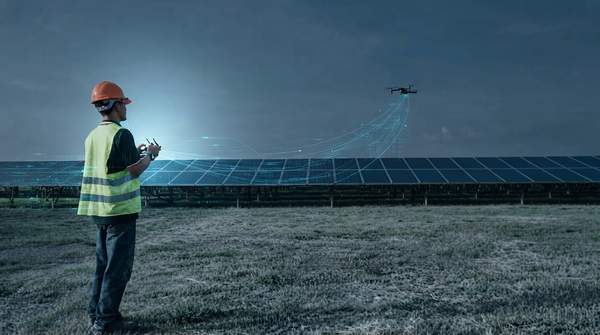
Wind vs. Solar: The Distinctive Roles of AI in Predictive Maintenance
Artificial intelligence transforms renewable energy asset management through predictive maintenance, but its application differs significantly between wind turbines and solar farms. While both benefit from reduced downtime and costs, AI focuses on mechanical health for wind and electrical integrity for solar, requiring tailored data inputs and fault detection methods.
Oct 11, 2026 · 4 min read

The Ethical and Policy Challenges of Autonomous Weapons
Lethal autonomous weapons systems (LAWS) present complex international governance challenges, raising fundamental questions about human control, moral responsibility, and the future of warfare. Policymakers and ethicists are grappling with establishing regulatory frameworks to address the profound ethical dilemmas posed by delegating lethal decisions to machines.
Oct 7, 2026 · 5 min read

A Decision Framework for Using Digital Twins with RPA
This article presents a decision framework for leveraging process twins, a type of digital twin, to simulate, test, and optimize Robotic Process Automation (RPA) workflows in a risk-free environment before deployment. It outlines how to evaluate which RPA processes are best suited for this advanced testing approach.
Oct 4, 2026 · 4 min read

Comparing Global AI Ethics Frameworks: Accountability, Governance, and Public Participation
This article compares global AI ethics frameworks, examining diverse approaches to accountability for AI errors, governance structures, and public participation mechanisms. It analyzes the EU AI Act, UNESCO Recommendation, and Kyrgyzstan's draft rules to inform responsible AI development and compliance for businesses and policymakers.
Oct 2, 2026 · 4 min read

Optimizing Supply Chains with AI and Machine Learning: A Strategic Framework
Artificial intelligence (AI) and machine learning (ML) are revolutionizing supply chain management by enhancing efficiency, accuracy, and resilience. This article outlines how these technologies optimize functions like demand forecasting, inventory management, logistics, and predictive maintenance, providing a strategic framework for successful implementation.
Oct 2, 2026 · 5 min read

Graph Neural Networks: Accelerating Drug Discovery Through Advanced Molecular Modeling
Graph Neural Networks (GNNs) are revolutionizing drug discovery by enabling advanced molecular modeling and prediction of interactions. These AI tools accelerate the identification of new therapeutic compounds through applications like property prediction, drug-target studies, and de novo design.
Sep 30, 2026 · 5 min read

Specialized Edge AI Processors for Low-Latency Industrial Automation
Specialized Edge AI processors are transforming industrial automation by enabling critical low-latency, on-device inference. Understanding the architectural advantages of NPUs, FPGAs, and MCUs with accelerators is key for selecting the optimal processor for industrial neural network workloads.
Sep 30, 2026 · 4 min read

HCLSoftware Acquires Robotiq.ai to Integrate RPA for Enhanced Enterprise Automation
HCLSoftware announced its intent to acquire Robotiq.ai for €9 million, integrating its enterprise Robotic Process Automation (RPA) capabilities into the HCL UnO Agentic platform. This strategic move aims to enhance enterprise automation by enabling direct task execution in applications lacking APIs, facilitating secure, governed, and reliable production-scale automation.
Sep 29, 2026 · 4 min read