
All Stories

Brad Sugars’ Reputation as a Business Educator Comes From Teaching Owners How to Think
Brad Sugars' reputation as a business educator stems from teaching owners how to think more clearly about growth, money, systems, leadership, and freedom, rather than just delivering information. His methodology focuses on changing behavior, practical application, and connecting business success to an owner's personal life and goals.

Free AI Coding Agents Compared: Which Tool Fits Your IDE, Terminal, and Budget
This comparison of free AI coding agents focuses on how they integrate into your workflow (IDE vs. Terminal) and their cost structures (free tiers vs. open-source BYOK). It provides a framework to choose the right tool based on your development environment and budget.

Why Edge AI Chips Are Built Around Heterogeneous SoCs and Specialized NPUs
Edge AI chips predominantly use heterogeneous System-on-Chip (SoC) architectures, combining general-purpose CPUs with specialized accelerators like Neural Processing Units (NPUs). This design is crucial for meeting strict power budgets by assigning AI inference and other tasks to the most efficient silicon available, with NPUs offering superior energy efficiency for AI workloads.

Local vs. Cloud: How Amazon's Bee and the Friend Wearable Split on Your Conversation Data
The primary distinction between Amazon's Bee and Friend wearables is their data processing architecture: Bee processes conversations locally on-device with no audio storage, whereas Friend utilizes cloud-based processing involving third-party AI services. This difference has significant implications for user privacy, particularly in sensitive environments.
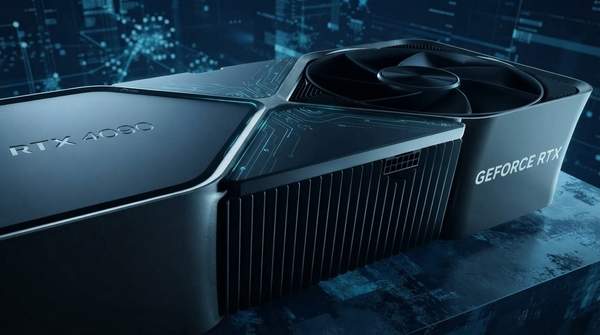
Software Mods Reportedly Double AI Compute on RTX 20, 30, and 40 Series GPUs — Here's What the Numbers Actually Show
Community-developed software mods are reportedly unlocking up to twice the tensor throughput on NVIDIA RTX 20, 30, and 40 series GPUs for AI workloads. These mods target software limits on FP16/BF16 operations, showing real-world gains in LLM prompt processing and image generation, but do not affect gaming or token generation.

How Does Ozi Gaming UK's Gaming PC Delivery Work? A Clear Walkthrough
When you invest in a new gaming PC, the excitement is often matched by anticipation for its arrival. Understanding the delivery process is key to a smooth experience. This guide provides a clear walkthrough of how Ozi Ga…

How Deepfake Detection Actually Works—and Why It Still Fails
Deepfake detection employs forensic analysis of digital traces and visual scrutiny of content inconsistencies, but current methods face significant limitations. These include generalization failure against new generation techniques and the inability to perform real-time detection, making them one layer of defense rather than a foolproof solution.

How AI Turns Brain Signals Into Device Commands: The Four-Stage BCI Pipeline
This article details the four-stage AI pipeline that transforms raw brain signals into actionable device commands for Brain-Computer Interfaces (BCIs). It explains how AI is crucial for signal acquisition, preprocessing, decoding user intent, and actuating external devices.

Firefly, Midjourney, or Stable Diffusion: Which AI Image Tool Gives You the Control You Need?
The article compares Adobe Firefly, Midjourney, and Stable Diffusion, evaluating their strengths in AI image generation for creative professionals. It highlights that the optimal choice hinges on balancing workflow integration, artistic ideation quality, and the level of technical control desired.

An Enterprise Checklist for AI Model Governance: Auditing Fairness, Transparency, and Accountability
This article provides a practical checklist for enterprises to audit and implement AI model governance, focusing on fairness, transparency, and accountability. It synthesizes core principles and actionable controls to ensure ethical, compliant, and performant AI systems.

Pillowsonic Symphony Fits Bluetooth and AUX Listening Into One Bedtime Setup
Pillowsonic Symphony offers a versatile under-pillow audio system, integrating both wireless Bluetooth and a standard auxiliary input for diverse listening needs. This allows users to enjoy podcasts, music, or relaxation recordings from various devices without changing their comfortable setup.
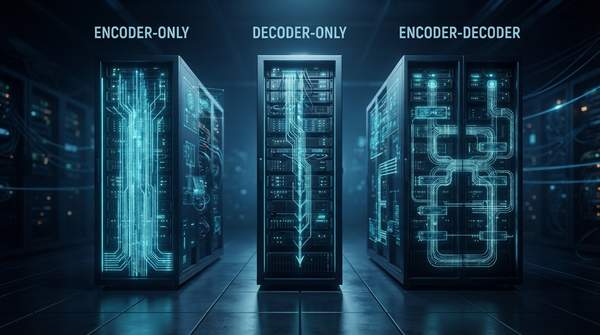
Three Architectural Patterns: How Transformers Power Far More Than Language Models
The Transformer architecture has evolved into three core patterns—encoder-only, decoder-only, and encoder-decoder—each suited for distinct tasks like understanding, generation, or sequence transformation. These versatile patterns extend beyond language models, finding applications in computer vision and other domains.
How Machine Learning, Computer Vision, and NLP Are Accelerating Cancer Research
Artificial intelligence, encompassing machine learning, computer vision, and natural language processing, is rapidly accelerating cancer research across various stages, from early diagnosis and drug discovery to personalized treatment strategies and unlocking clinical insights from vast datasets.
Why Banks Are Blocking AI Agents — and Which Architectures Create the Risk
Banks are blocking AI agents due to architectural security risks, as agents take actions rather than just producing outputs. The inability to distinguish AI actors from human users via compromised credentials necessitates a shift towards agent-specific authorization and robust governance frameworks.

How AI Models Accelerate Target Identification and Lead Optimization in Early Drug Discovery
Artificial intelligence models are transforming early drug discovery by accelerating target identification through multi-omics data integration and enhancing lead optimization via generative design of novel molecules. Understanding the distinct roles of these AI techniques is crucial for evaluating their strategic impact and investment.

Where Lunar Fits Between SIEM, IAM, and Incident Response in a SOC Credential Exposure Workflow
Lunar integrates into a SOC workflow by providing external credential and session exposure monitoring, complementing SIEM for internal logs and IAM for access management. It helps SOC teams detect compromised credentials outside their environment before internal activity occurs.

Neuro-Symbolic AI Explained: How Hybrid Systems Combine Pattern Recognition with Logical Reasoning
Neuro-symbolic AI is an emerging paradigm that merges neural networks' pattern-recognition capabilities with symbolic AI's explicit rules and logical reasoning. This hybrid approach aims to create AI systems that are more explainable, robust, and data-efficient than either method alone, addressing limitations of traditional AI.
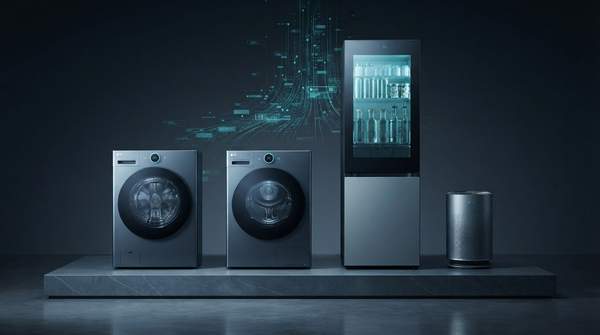
Samsung vs. LG Smart Home AI: On-Device Privacy Meets Open Ecosystems
This article compares Samsung's SmartThings and LG's ThinQ smart home AI strategies, focusing on their differing approaches to on-device processing, privacy, and ecosystem openness. It helps consumers understand the trade-offs between Samsung's privacy-centric, integrated model and LG's adaptive, context-aware intelligence.
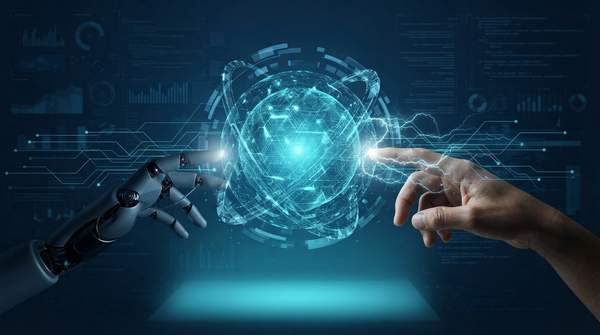
What Are AI Agents? How Autonomy Separates Them From Bots and Assistants
AI agents are autonomous software systems that perceive, reason, and act to achieve goals independently, distinguishing them from simpler bots and assistants. Their core architecture and functional loop enable them to perform complex, multi-step tasks proactively and adaptively.
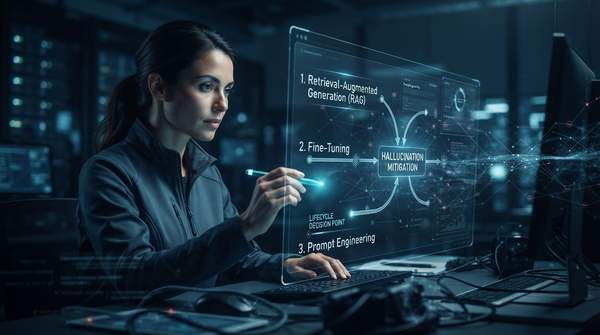
Choosing the Right Fix for LLM Hallucinations: A Lifecycle-Based Decision Framework
Choosing the right strategy to mitigate LLM hallucinations requires diagnosing the error type (intrinsic vs. extrinsic) and considering the intervention stage in the LLM lifecycle. This article presents a decision framework mapping core strategies like RAG, fine-tuning, and prompt engineering to specific hallucination types and implementation complexity.

Milvus vs. Weaviate vs. Qdrant: A Decision Framework for Open-Source Vector Databases
This article presents a decision framework for selecting among open-source vector databases Milvus, Weaviate, and Qdrant for RAG and semantic search applications. It analyzes their distinct strengths in scalability, features, and operational simplicity to guide your choice.
Y Combinator vs. Techstars: Which Accelerator Fits Your Startup?
Choosing between Y Combinator and Techstars involves a trade-off: YC offers more upfront capital and a strong fundraising brand, whereas Techstars provides hands-on mentorship and local network access with a smaller investment. The best fit depends on your startup's stage, goals, and preferred working style.

How AI Turns Data Center Cooling Into a Self-Correcting Feedback Loop
AI is transforming data center cooling into a self-correcting feedback loop, using real-time sensor data and predictive modeling to autonomously adjust cooling hardware. This shift from reactive to predictive management delivers significant energy savings and improved efficiency, especially for high-density AI environments.

AI Alignment, Explained: The Technical and Normative Problems—and How OpenAI and Anthropic Are Tackling Them
AI alignment is the challenge of ensuring advanced AI systems reliably pursue goals beneficial to humans, a problem relevant today for systems like chatbots. The field faces both technical (how to inscribe values) and normative (which values to inscribe) challenges, with leading labs like OpenAI and Anthropic developing distinct strategies.