
All Stories

AI papers are passing peer review, threatening academic integrity
An AI system called The AI Scientist produced a manuscript that achieved peer-review scores high enough to surpass the average human acceptance threshold at a major workshop of the International Confe

How Knowledge Graphs Make AI Answers More Accurate
This article explains how integrating knowledge graphs into Retrieval-Augmented Generation (RAG) systems significantly enhances AI's factual accuracy and reasoning capabilities. By moving beyond unstructured text, knowledge graphs provide a structured foundation that reduces AI hallucinations and improves reliability.

A Decision Guide to Advanced LLM Prompting Techniques
Advanced LLM prompting techniques like Chain-of-Thought, Self-Consistency, and Tree-of-Thoughts guide model reasoning for improved output quality and accuracy. This guide helps users select the optimal technique based on specific task goals, transforming LLM interaction into a deliberate problem-solving process.

A Decision Framework for Using Digital Twins with RPA
This article presents a decision framework for leveraging process twins, a type of digital twin, to simulate, test, and optimize Robotic Process Automation (RPA) workflows in a risk-free environment before deployment. It outlines how to evaluate which RPA processes are best suited for this advanced testing approach.

How to Prevent AI Model Collapse
Generative AI models can suffer from 'model collapse' when recursively trained on synthetic data, leading to a loss of diversity and flawed outputs. The article outlines proactive mitigation strategies, including data curation and training oversight, to maintain model integrity.
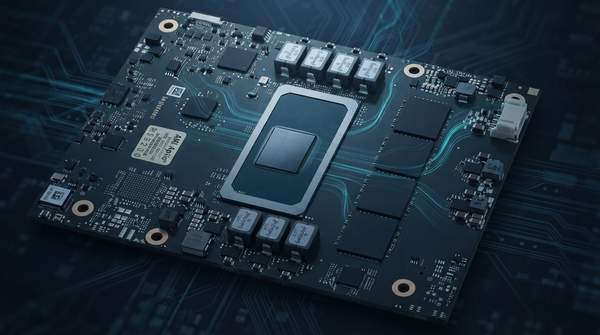
Specialized Edge AI Processors for Low-Latency Industrial Automation
Specialized Edge AI processors are transforming industrial automation by enabling critical low-latency, on-device inference. Understanding the architectural advantages of NPUs, FPGAs, and MCUs with accelerators is key for selecting the optimal processor for industrial neural network workloads.

What Are Diffusion Models and How Do They Generate Images?
Concerns about data privacy, security, and artistic ethics have emerged with the extensive deployment of diffusion models in image generation, according to opportunities and challenges of diffusion mo

How Reinforcement Learning From Human Feedback (RLHF) Shapes AI
Large language models like ChatGPT owe their remarkable ability to understand and respond to human prompts directly to Reinforcement Learning from Human Feedback (RLHF).

What is Interpretable AI and Why Do Trustworthy Systems Matter?
Opaque AI technologies already raise serious patient safety concerns.

What Is Embodied AI's Role in Future Robotics?
By 2025, the UBTech Walker S1 robot will be adjusting its posture and grip in real-time on Chinese car assembly lines, handling diverse components with a dexterity once thought impossible for...

How to Build AI Applications with LangChain
Over 63% of mid-sized companies (100-2000 employees) now run AI agents in production, reports LangChain .

What is Agentic AI? Its Core Components and Capabilities Explained
In complex healthcare workflows, Agentic AI architectures, supported by high-speed and low-latency 6G communication, are poised to enable efficient autonomous decision-making and coordinated task exec

Where Lunar Fits Between SIEM, IAM, and Incident Response in a SOC Credential Exposure Workflow
Lunar integrates into a SOC workflow by providing external credential and session exposure monitoring, complementing SIEM for internal logs and IAM for access management. It helps SOC teams detect compromised credentials outside their environment before internal activity occurs.

What is On-Device AI and Why Does It Matter for Smart Devices?
In a groundbreaking move, Meri Life Sciences has deployed 'Robotic-assisted surgery platforms' that use on-device AI to guide surgeons with real-time 3D visualization, feedback, and predictive correct

What is Edge AI in Industrial Automation and Why Does it Matter?
By 2040, the Edge AI market is projected to skyrocket from $25.

From Clicks to Content: How AI Powers Personalized Experiences
Artificial intelligence (AI) personalization leverages customer data and machine learning to deliver tailored experiences, products, and services at scale. By analyzing behavior, AI anticipates individual needs, making interactions more relevant and effective for each person.

How Neural Style Transfer Works: A Tale of Two AI Methods
Neural Style Transfer (NST) is a generative AI technique that merges the content of one image with the style of another, evolving from slow optimization to fast generative models. The article explores these two primary methods, their trade-offs, and diverse applications beyond art.

How AI Accelerators Boost Edge Computing Power
AI accelerators are enabling artificial intelligence tasks to run directly on edge devices, overcoming critical cloud limitations such as processing delays, data privacy risks, and high bandwidth costs. This shift is driven by specialized hardware like NPUs and efficient software models, making real-time intelligent applications practical across various industries.

A Small Business Guide to Identifying Tasks for Robotic Process Automation
Robotic Process Automation (RPA) offers small businesses a way to automate repetitive, rule-based tasks, freeing up staff and cutting costs. This guide helps identify suitable tasks, outlines key benefits, and discusses challenges for successful RPA implementation.

What is Latent Space in Generative AI and Why Does It Matter?
Stable Diffusion, the text-to-image model we all love, crafts stunning visuals.

LangChain vs. LlamaIndex: Choosing Between Orchestration and Retrieval
LangChain and LlamaIndex are LLM frameworks with distinct strengths: LangChain excels at orchestrating complex agent logic, while LlamaIndex specializes in efficient data retrieval for RAG. Developers often combine them, using LlamaIndex for data and LangChain for agent workflow management, depending on their application's primary complexity.

What is Neural Style Transfer AI Image Art Transformation?
An artificial system, leveraging Deep Neural Networks, now creates artistic images of such high perceptual quality they are indistinguishable from human-made art, according to arxiv .

Low-Code AI Platforms: A 2028 Roadmap for Business Adoption and Competitive Advantage
Low-code AI platforms are becoming a strategic imperative for businesses seeking to accelerate digital transformation and gain a competitive edge. These platforms democratize AI development, offering speed, cost savings, and accessibility beyond traditional technical teams.